← All Articles
How to Start a Business: A 10-Step Guide to Launch Your Startup
Learn how to start a business with this step-by-step guide. Follow 10 proven steps, from market research to a business plan and funding your startup.
Learn how to start a business with this step-by-step guide. Follow 10 proven steps, from market research to a business plan and funding your startup.
Want to learn how to start a business but feel unsure where to begin? You are not alone. Every entrepreneur starts right where you are now. Starting a new business takes planning, money choices, and a series of legal business activities. The good news is that the path is clear once you break it into steps.
This step-by-step guide walks you through 10 proven steps to start a business in the U.S. It follows the same framework the U.S. Small Business Administration uses. We will also show a faster way to launch a business with less risk. Let's turn your idea into a reality.
First, a reality check. Starting a business is exciting, but it is not easy. According to U.S. Bureau of Labor Statistics data, about 1 in 5 new businesses close in the first year. Nearly half are gone within five years. The right plan and the right model can improve your odds.
Here is your 10-step guide in one quick view. Each step is explained below.
| Step | What You Do | Why It Matters |
|---|---|---|
| 1. Market research | Study demand and rivals | Proves people want your product or service |
| 2. Business plan | Map goals and costs | Your roadmap to run your business |
| 3. Fund your business | Raise or borrow cash | Covers your startup costs |
| 4. Business location | Pick where you operate | Affects taxes and rules |
| 5. Business structure | Choose a legal structure | Sets taxes and personal liability |
| 6. Business name | Name and register your business | Makes your business official |
| 7. EIN and tax IDs | Get federal and state tax IDs | Lets you pay taxes and hire |
| 8. Licenses and permits | Apply for what you need | Keeps you legal |
| 9. Business bank account | Open a business bank account | Splits business and personal money |
| 10. Launch | Open and market | Time to prepare for success |
First, conduct market research. This tells you if people want your idea. Good market research shows who your potential customers are and what they will pay. It also shows who you will compete with.
Look at your target audience and your rivals. Thorough market research helps you turn your idea into a successful business. Skip this step, and you may build something no one needs.
Next, write a business plan. Think of it as a roadmap. A solid business plan covers your goals, your costs, your prices, and your customers. It also shows how the business will make money.
A well-written business plan helps you get loans and grants later. You do not have to start from scratch. Use the SBA's free business plan template to guide you. This is one of the most useful tools for any new business.
Now, fund your business. Every new small business needs some money to open its doors. Your business plan shows how much cash you need to start. If you do not have it, you can raise or borrow it.
There are many ways to fund a startup:
Pick the mix that fits your business needs and your comfort with risk.
Your business location is one of the most important decisions you will make. It affects your taxes, your rules, and your sales. This is true whether you open a shop or an online store.
Some businesses run from home. That keeps startup costs low. A home-based model is a smart choice for many small business owners today.
Your legal structure shapes your taxes and your risk. It also affects your business registration. The type of business you run helps guide the pick. So choose your business structure with care.
Common options include:
Many small business owners pick an LLC for balance. When in doubt, ask a lawyer or accountant.
Your business name is part of your brand. Pick one that fits your spirit and is easy to recall. Then check that no one else already uses it.
After that, you need to register your business. Registering your business name makes it a legal entity in your state. This step also protects the name so rivals cannot take it.
You will need an EIN, which stands for employer identification number. The SBA calls it a social security number for your business. You use it to pay taxes, hire staff, and open a bank account.
The good news: the IRS gives you an EIN for free. Some states also want their own tax IDs. So check if you need both federal and state tax IDs where you live.
Almost every business needs a license or permit. The exact licenses and permits depend on your industry and state. A food truck needs different papers than a pool service.
Check your city, county, and state rules before you open. It is also smart to get insurance. A business owner's policy bundles common coverage into one plan. Staying legal protects the business you work so hard to build.
Do not mix business and personal money. Open a business bank account instead. A business checking account keeps your records clean and your taxes simple.
Setup is easy once your registration and EIN are ready. This small step makes you look pro to banks and clients. It also makes tax time far less stressful.
It is time to cut the ribbon and launch your business. Launching your new business is a big moment. But a quiet launch helps no one. You need customers to find your products and services.
Use smart marketing strategies to get the word out:
Keep learning as your business grows. Track your numbers and manage your business with care. Fix what is weak, and prepare for success. That is how you start and grow a business that lasts.
Those 10 steps work. But starting from scratch is hard and risky. You build the brand, the plan, and the system all alone. That is a big reason so many new firms fail early.
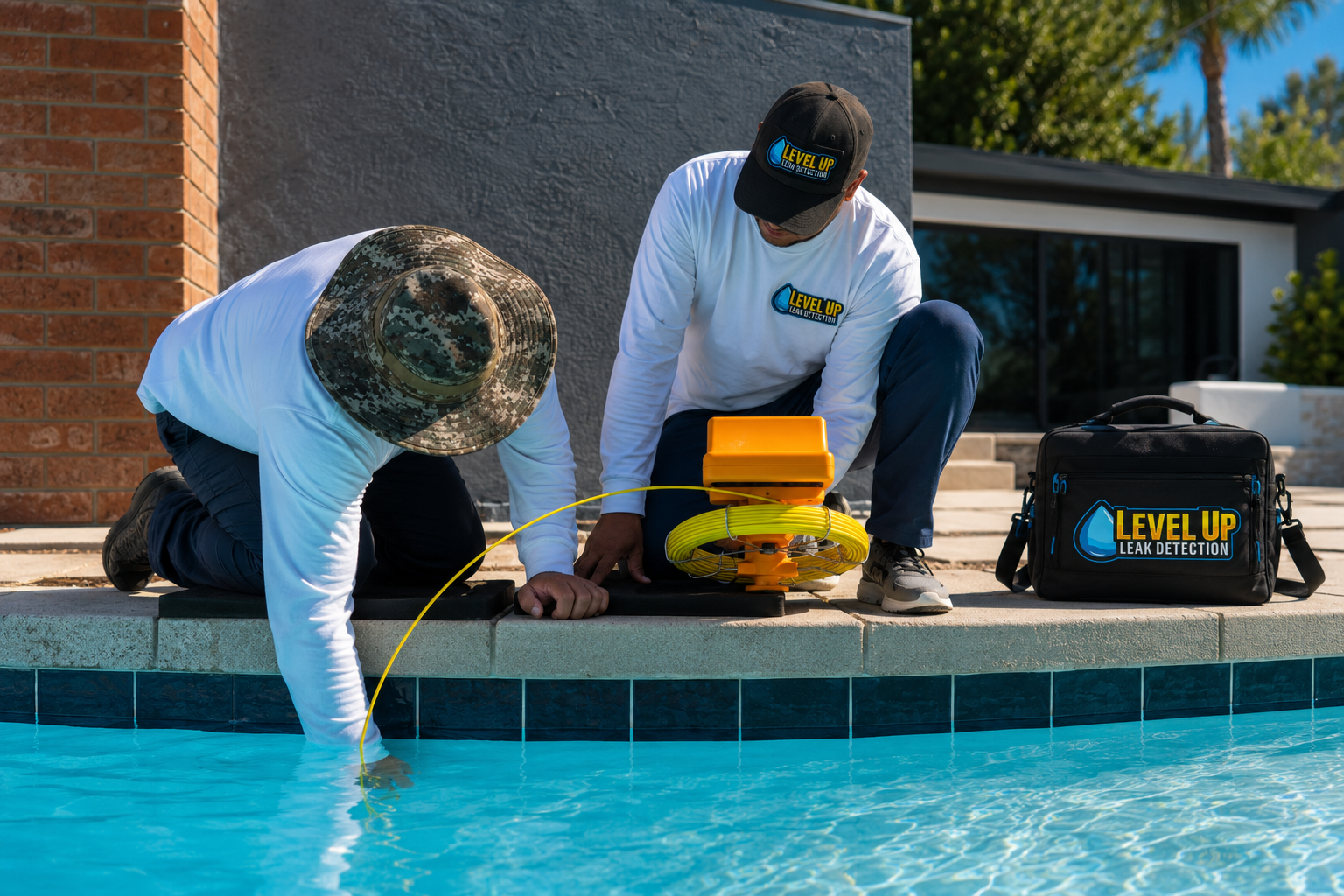
A proven franchise skips much of that hard work. You get a tested plan, a known brand, training, and support on day one. One strong option in the home service space is Level Up Leak Detection.
Level Up finds hidden leaks in pools, spas, and water features. Why is that a smart business? Demand is huge and steady. There are over 10.7 million pools in the U.S., and about 5 percent leak right now. That is more than 500,000 pools that need help today.
Pools leak in every state, too. Soil shifts and cracks pipes. Clay soil swells and shrinks, while sandy soil settles. Cold winters freeze lines, and hot, dry spells add stress. Leaks also waste water. The EPA reports that household leaks waste nearly 1 trillion gallons a year across the country. So the work does not slow down, coast to coast.
Level Up is a home-based business. That keeps your startup costs and overhead low. Here are the quick facts.
| Detail | What You Get |
|---|---|
| Business model | Home-based leak detection, repairs, and inspections |
| Franchise fee | $55,000 initial fee |
| Royalty fee | 8% of gross sales |
| Marketing fund | 4% of gross sales |
| Technology | Powered by LeakTronics leak detection gear |
| Markets served | Residential and commercial pools, spas, and water features |
Each owner learns to find and fix leaks the right way. Level Up trains you to offer:
You also get real support. That includes step-by-step training, expert troubleshooting, and one-on-one mentorship. You even get marketing and lead tools to help you grow your business. Want to see the work up close? Watch this short video to get a feel for it.
That training comes straight from the source. Darren Merlob founded LeakTronics, built the gear owners use, and has coached more than 3,000 contractors across 30 years. A business idea is only as good as the expert behind it. That backing is a big reason this leak detection franchise beats going it alone.
Curious how the money compares to pool cleaning? See our guide on why leak detection earns more in less time. You can also weigh it against other brands in our roundup of top low-cost franchise options with high ROI.
Reading about the steps is one thing. Watching them work is another. In this clip, a Level Up owner shares how the model played out for them in the field, from training to their first paid jobs. Watch the owner testimonial and notice which hard steps the franchise handled for them.
Look back at the 10 steps above. A solo founder faces all of them alone. That is where most of the risk and late nights live. A Level Up franchise clears many of those steps for you.
The brand, the plan, and the proven system arrive on day one. You still handle a few basics, like your EIN and your bank account. But you skip the hardest guesswork in steps 1, 2, and 10. Owners tend to be hands-on people who like fixing things and helping customers. Pool experience is not required, since the training covers the skills. If that sounds like you, this may be your path.
You now have the full playbook for how to start a business. Follow all 10 steps yourself, at your own pace. Or hand the heavy lifting to a model that has done it before.
Level Up brings the plan, the training, the equipment, and the day-to-day support. Pools keep leaking in every state, so the phone keeps ringing. That mix of ready-made systems and steady demand is hard to beat.
Take the next step today. Call Level Up Leak Detection at 818-853-5725 or request franchise info here. No pressure and no hard sells, just honest answers about your future.
Comparing pool service franchise options? See how a pool cleaning franchise stacks up against a Level Up leak detection franchise on fees, demand, and fit.
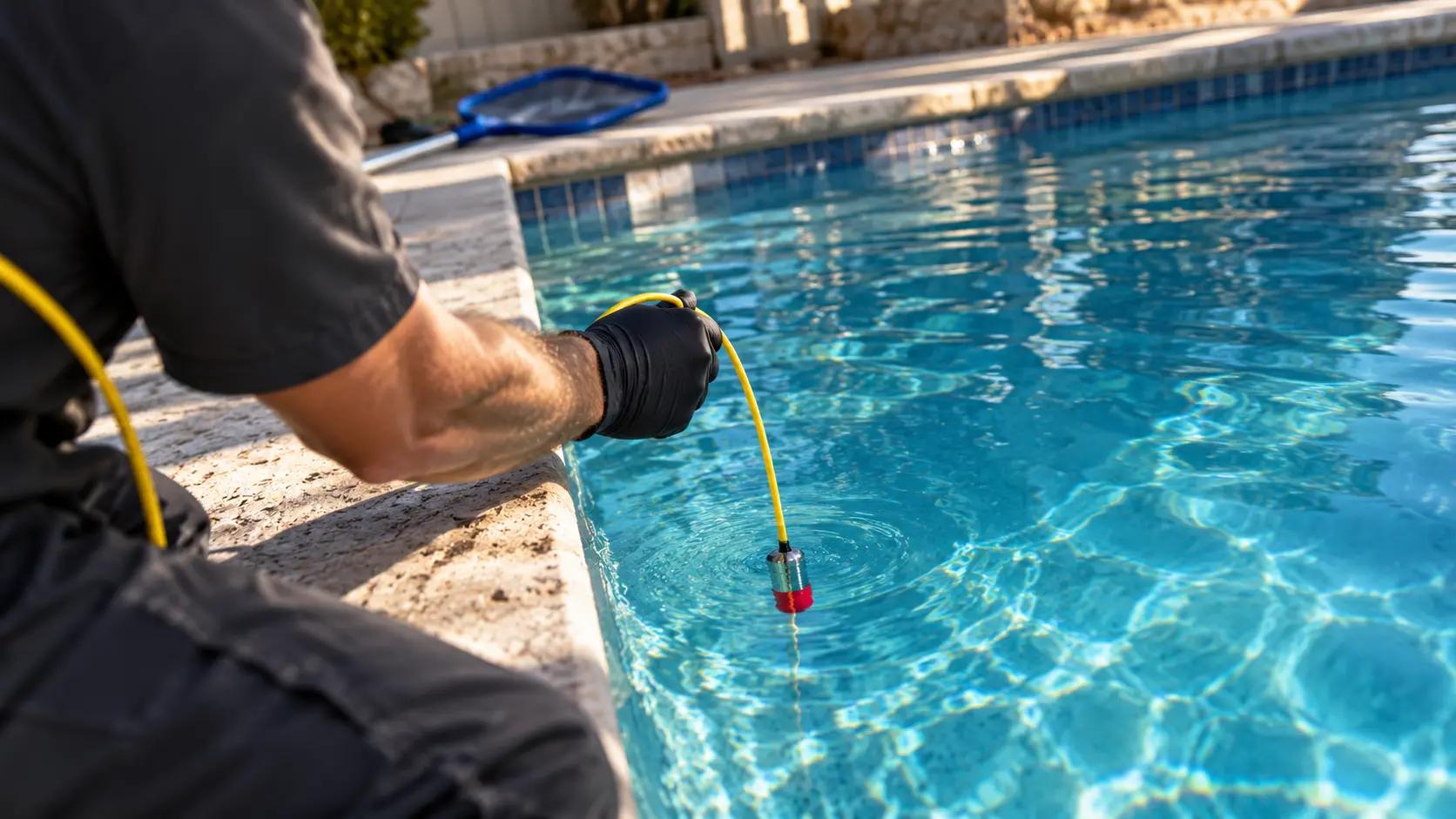
Thinking about starting a pool cleaning business? Get the honest steps to start a pool cleaning business, plus the underserved pool service niche that pays more.
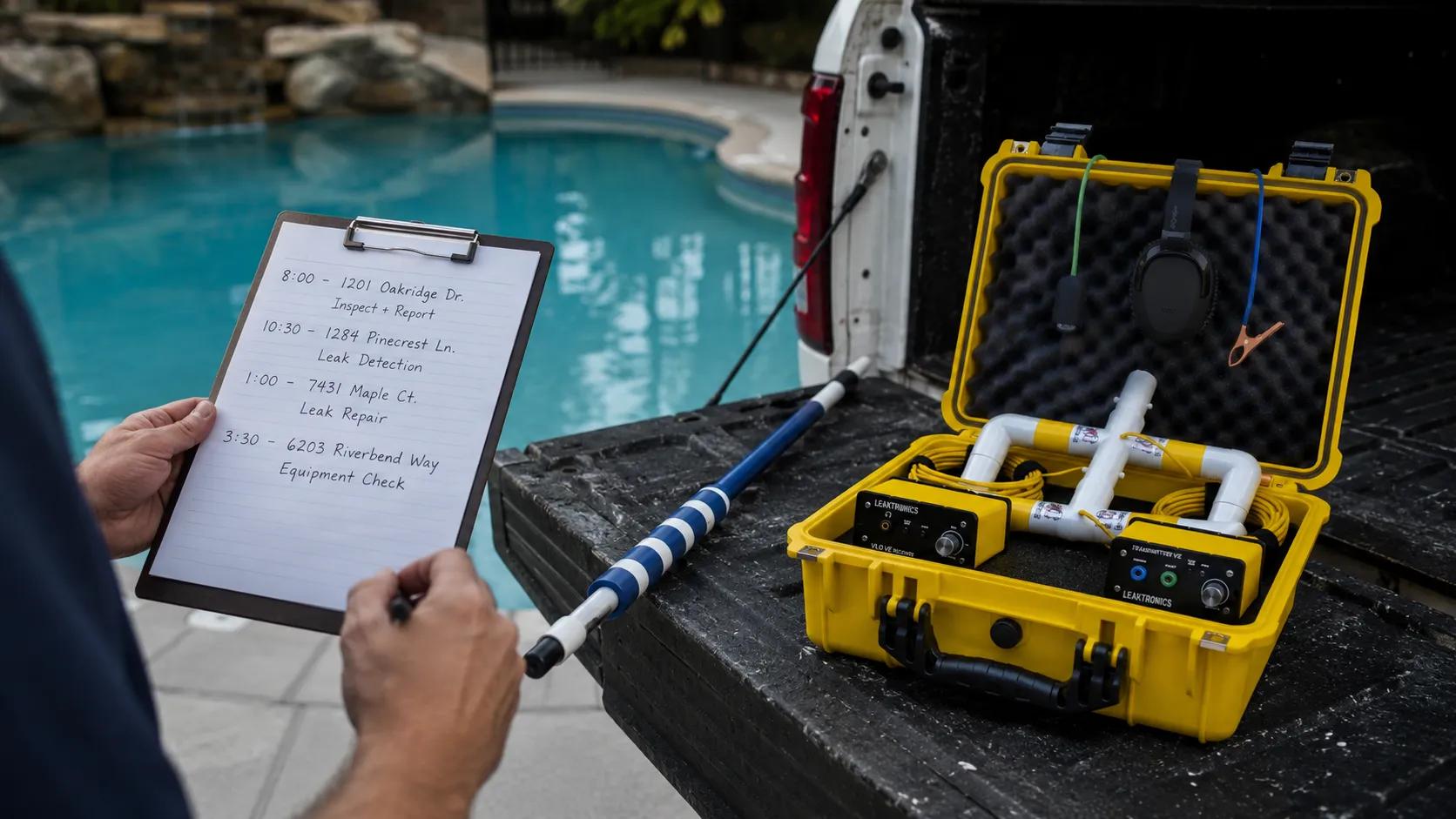
Explore the best small business ideas for 2026. Compare profitable ideas with low startup costs, plus a leak detection franchise most lists overlook.